
Does the thought of a solo bikepacking adventure get your heart pumping a little faster, either from excitement or trepidation (or a little of both)?
Are you intrigued by the abundance of solitude and self-reliance such a trip would offer, but can’t shake that little voice in the back of your head saying maybe it’s not for you?
I completely understand. I happen to be a type of person who is traditionally “not supposed to” go bikepacking alone — in my case, female — and I’ve spent many solitary miles contemplating the pros and cons of doing it anyway.
I’m here to tell you, bikepacking alone is a valid option no matter who you are, and can be profoundly rewarding. I first discovered bike travel with a fiery passion shared by absolutely no one else in my life. Of my first 10,000 miles of bike travel, 9000 miles were solo. It was empowering, at times mentally exhausting, and transformative in many ways.
This post shares my reflections on solo bikepacking: what makes it special, what makes it hard, and thoughts on how to do it safely. Your mileage may vary, so to speak. My introverted personality and female gender probably influence more of this than I’ll ever know. But whoever you are, if you’ve dreamed about bikepacking alone I hope you find encouragement here.
More Responsibility (and Freedom)
Let’s start with the obvious: when bikepacking solo you have to do all the things. You’ll have to pitch the tent and boil water for dinner at the end of a long day. If your tire goes flat you’ll be fixing it by yourself.
Less obvious, but more exhausting in my opinion, is the mental burden of bikepacking solo. Even when all is well I sometimes feel decision fatigue from the sheer joyous freedom of it. I have to get to decide when to break for lunch, how many times to stop and take pictures, and where and when to camp, every single time.
In higher-stakes situations this can be stressful. How much water should I carry for this dry stretch? Should I keep riding or wait out this storm? At times like these it can be comforting to bounce ideas off someone else and share the responsibility for the decision.
Though it may sound daunting, I’ve found this greater responsibility to be one of the biggest rewards of solo bikepacking. All the things I dreaded tackling alone turned out to be manageable, and in most cases far easier than I’d feared.

More Autonomy
If more responsibility is the negative side of the coin, more control and autonomy is the positive side. As a solo bikepacker you can craft exactly the trip you want: the mood, the pace, where to lay your head each night, which strangers to talk to and for how long.
There’s never a need to negotiate, justify, or apologize. If something goes wrong you can spend time recovering or waiting, or change plans entirely without disappointing anyone else.
It’s an annoying quirk of bikepacking that energy comes in waves, often out of sync between riding partners. If you wake up feeling tired on a solo trip, you can take a rest day without needing to negotiate with a partner who’d rather keep moving. Feeling like a total beast? Ride hard all day with no need to look back.
This freedom is fun and also offers subtler gifts. Those of us with people-pleasing tendencies sometimes find it hard to sense our own preferences through the mental noise of joint decisions. Take other people out of the equation and a deeper awareness emerges. I never feel more intuitive and in touch with myself than a few days into a solo bikepacking trip.

More Solitude and More Connection
Sometimes bikepacking is about solitude. As an introvert I can soak up solitude like a dry sponge; it takes me weeks to start feeling lonely.
Extroverts can struggle with loneliness on solo bikepacking trips, and I do understand. Eventually – it just takes me longer – I do start to crave companionship and someone to share the highlights with. This is when I really start to appreciate the serendipitous interactions that pop up along the way.
Riding solo, especially in populated areas, is like a magnet for random interactions. When I travel with others I feel more closed off, as if moving in our own little bubble. Days are more predictable and often easier. When solo there’s no one else to trade off with when you’re hungry and tired and someone just asked “Where you ridin’ to?” for the tenth time that day.
But it’s worth it! My solo trips, while more mentally and emotionally challenging, leave me with the deepest sense of connection to people I meet along the way. And interestingly they leave me more connected to myself too. There is something very curious and fun about seeing who surfaces from within when I’m chatting with people I’ll never see again in a place where I don’t know a single soul.

More Danger?
Many people, like my mom (Hi Mom, I’m fine, really!) think bikepacking alone is more dangerous than bikepacking with others. There’s room for differing opinions on this topic, but here’s mine.
I think the chances of most common problems are about the same for a solo bikepacker as for a group. Groups can get caught in a storm together, run out of water together, and ride in dangerous traffic together. In the best-case scenario a group can support each other and work together to solve problems. But there’s also the possibility that group dynamics fracture under pressure and make things worse.
Our social human brains are wired to feel safer in groups, and I think we tend to overestimate the benefits of companionship and the dangers of solitude. When I ride solo the constant hypervigilance can be exhausting, and when I ride with others I feel nearly invincible by contrast. I try to remind myself that my brain exaggerates in both directions: when alone I’m usually safer than I feel, and in a group I may actually feel safer than I am.
Though the risk of bad luck is similar when solo or in a group, it’s the consequences that can be worse when solo. Run out of water? Perhaps your partner has extra to share. Get dangerously cold and wet in a storm? Maybe someone else in your group is warm and clear-headed enough to pitch the tent. Make a navigation error? Someone else might catch it.
With experience most of these mistakes can be avoided, or at least dealt with calmly. The least-experienced person in a group is probably safer with the group than alone, at least when riding a route that matches their companions’ higher experience level. The key, therefore, is to choose a route that matches your experience level and prepare well.

Safety Tips for Solo Bikepacking
Planning and Prep
Choose a route that suits your experience. You can still ride solo on your very first trip, but choose a route with cell service and some other people around. More experienced riders should gauge their comfort level with the hazards of outdoor travel – weather, water, etc – and decide whether a route is worth the risks.
Research the route and conditions. Identify your resupply stops, camping options, and water sources and spend time looking at the route. Check the weather forecast and err on the side of bringing the rain jacket.
Have backup navigation. In a remote area one of the most useful things you can do when riding solo is be confident in your navigation system. Have a reliable offline navigation method, and have a reliable backup too. Know how to use them both.
Be your own gear backup. Have a backup navigation plan, a warm enough jacket, and some chlorine dioxide tablets in case your water filter fails. If in doubt carry an extra power bank and water bottle. Know how to use all your gear.
Judge remoteness and respect remote routes. Riding solo on remote routes carries heavier responsibility; you can get away with more mistakes if your route will have at least a couple vehicles per hour. Though it’s always important to be self-reliant, I also believe in knowing your backup plan. If you get an unsolvable mechanical, run out of water, or get lost, consider how hard it would be to flag down help or hitch a ride.
Tell someone your plans. Send them your route and expected itinerary, how (or if) they’ll be able to contact you, and when you expect to be back. If they haven’t heard from you by a certain time, what should they do? (Generally they should try to contact you first, wait an agreed-upon amount of time, and then – in the worst-case scenario – contact local police or 911 to report you overdue.)
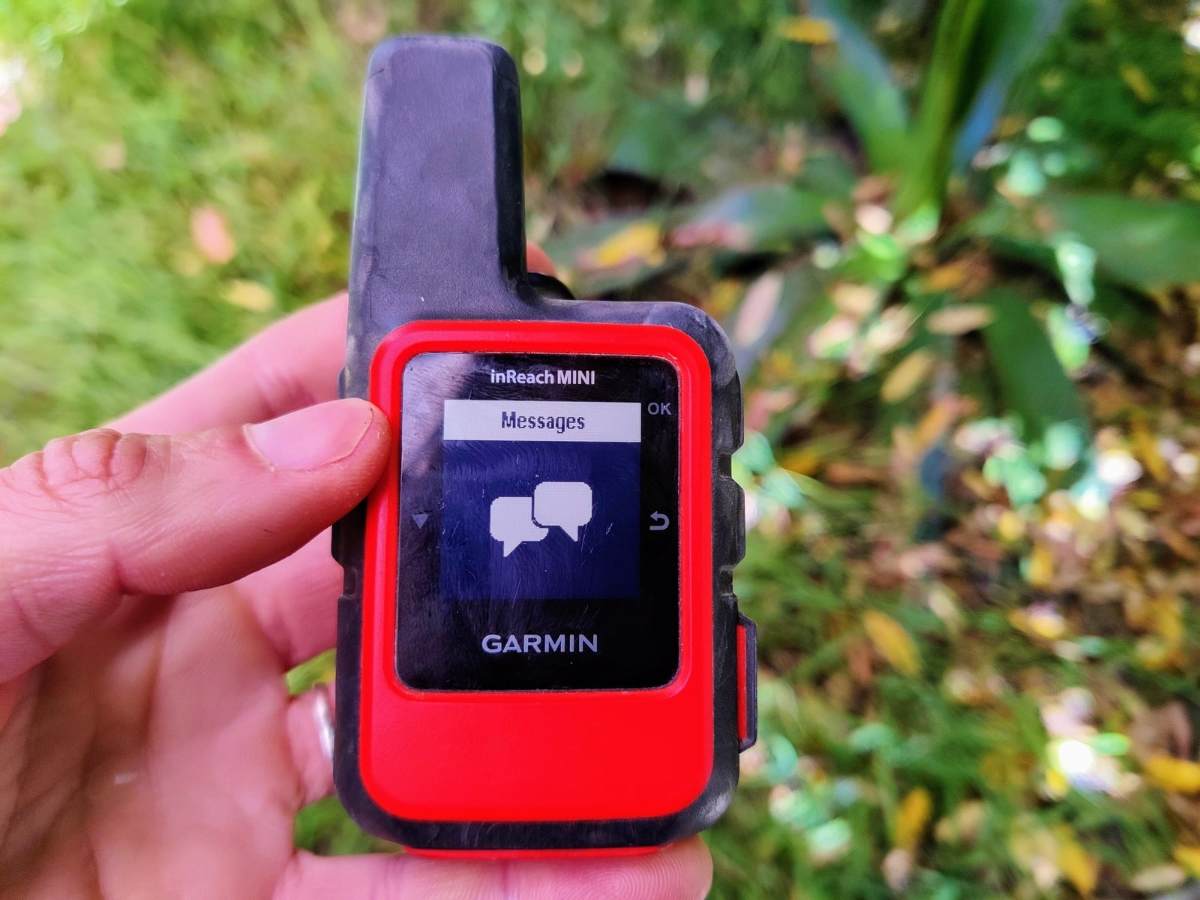
Carry a satellite messenger like the Garmin InReach Mini if you’ll be riding without cell service. This gives you the famous “SOS button” in case of life-threatening emergency, but more importantly it lets you contact friends or family for information and support. If you discover a need for more info about what lies ahead, ask your contact to look it up for you.
While Riding
Congratulations, you made it through the hardest part! Starting a solo trip can be nerve-wracking, but you’ll soon find your rhythm. Here are some ways to increase your odds of a trouble-free trip.
Make more conservative decisions. Carry that extra liter of water, stop riding an hour before dark, put on your rain gear or stop to camp before you get soaked and cold. If riding technical trails maybe don’t get as sendy as you might with friends.
Try to be logical about risk. What really needs your attention right now, and what can you do about it in advance? The thought of camping alone tonight might be the scariest, but running out of water on a hot afternoon might actually be the most dangerous.
Mitigate the risks that actually do get worse when solo. I don’t know of many, but grizzly bears may be one. If you’re riding solo in grizzly territory take extra care with cooking and food storage, keep bear spray handy, and make noise coming around corners. Another example is arguably traffic safety; a group of cyclists riding together may be more visible on the road.
Give yourself what you need. If you’ve had enough solitude, seek out an established campground for the night. If you’ve had enough people, find a secluded wild camp spot. Solo hypervigilance can be tiring on a long trip. Maybe it’s time to spend money on a motel where you’ll feel extra safe for a night.
Bike Repair Skills
Many people are afraid to ride solo because they don’t trust their bike repair skills. I have mixed feelings because yes, it’s important to be self-reliant when bikepacking. But also, if you wait until you can definitely fix anything that might go wrong, you’ll never go bikepacking!
Though I’ve learned how to deal with most common mechanical problems, there are still plenty of potential issues that would leave me stranded. That’s why a backup plan is always important, even for experienced riders.
So when it comes to bike repair skills I advocate for a middle ground, and these are some thoughts that might help you find it.
If you choose routes appropriate for your experience level, you can learn as you go. Figure out how to change a tube or plug a tire, align your derailleur(s), adjust your brakes, and off you go on a not-too-remote route with a solid backup plan. The more you ride, the more you’ll learn.
Practice repair and maintenance as often as you can when not bikepacking. Thanks to the internet it’s never been easier. Instead of dropping your bike at the shop next time you need something done, make a project of muddling through on your own.
Treat yourself to a tool kit, grab a cold beer or some relaxing hot tea, roll up your sleeves and keep some pumice hand cleaner at the ready. Learn to change your chain, align your gears, seat your own tubeless tires, adjust and replace brake pads, replace your cables and housing, maybe clean and repack your hubs and bleed your hydraulic brake hoses.
If you get stuck, Google and YouTube are your friends. If you mess it up, your local bike shop can bail you out. Just try to get your hands dirty as often as possible. When bikepacking alone in a place with no internet connection, actual experience working on your own bike is so much more valuable than having watched a few videos.
Finally, don’t stress too much. Your bike repair skills only need to be advanced if you’re traveling in a remote area far from any roads with vehicle traffic. If you make an honest effort to learn the basics and then find yourself in over your head, the universe will most likely give you a free pass.

On Fear and Personal Safety, Especially for Women
This loaded topic can be emotional for some, and often devolves into binary statements (it’s safe or it’s dangerous). I could write for days on the nuance in between, but I’ll try to summarize. This is my opinion based on my experience.
Keep it in perspective. Most people think a solo woman is at greater risk of assault. True, more women than men are victims and this looms large for many of us who were taught to fear it by well-meaning adults when we were kids and young women. But if you look into the statistics (and I have) they are skewed by situations most bikepackers aren’t exposed to. The “stranger in the bushes” scenario is relatively rare.
Most people are good. I’ve lost count of all the times a vulnerable situation worked out really well. The “bad” folks may be out there, but they are a very small percentage and most people you meet won’t be among them.
Don’t let paranoia about personal safety steal your attention from more important and immediate risks, like danger from traffic or difficult weather. Also try not to let it rob you of positive interactions with good people.
Camp where you’ll sleep well. When I’m solo I prefer to sleep hidden from the road or at an established camp area with multiple groups. I avoid “in between” places where I might end up alone with just one other person.
Fear is just information from your nervous system, and you decide what it means and what to do about it. Unease at being alone in a big wild place can manifest in many ways: fear of wildlife, fear of the dark, fear of people. I’ve met many men who feel fear when camping alone; women do not have a monopoly on this.
Advice for worst-case scenarios: If you do get a bad vibe from someone, you have more control than you might think. Follow your instincts, be vague with information, set boundaries or deescalate depending on your intuition. Lie if needed, and disengage: “Sorry gotta go, my friends are meeting me soon at a campground just up ahead.” Ride off in a different direction than your destination. Act confident or at least unpredictable. I believe most people don’t really want to commit a crime and will be easily dissuaded if they can’t get a read on how it’s likely to unfold.
Keep others’ comments in perspective. If you’re a woman trying to overcome fear while bikepacking solo, it will be frustrating when well-meaning people remind you that you’re supposed to be afraid. “Aren’t you scared?” the convenience store clerk will ask, with genuine curiosity, before you pedal off into the woods. “Be careful out there!” Sometimes this can really suck, but remind yourself: they’re just projecting their own fears onto you.
Lastly, if you feel afraid, know that you’re not alone. I have fought fear in varying amounts during every single day of my solo rides. I feel I’ve been an average amount of lucky – not unlucky, but also not miraculously dodging disaster at every turn – and I’ve managed fine. For me the rewards have been worth the challenge of working through my fear.
I’m far from the most experienced solo female bikepacker. There are tons of us out there! Here’s a directory full of trip reports by solo female cyclists to inspire you, and a series of posts at The Town Bicycle where women discuss their solo bikepacking trips.

Other Assorted Observations
Taking Up Space
Sometimes I find it mentally tiring to spend so much time solo in public places, especially in such an attention-grabbing way. When I bikepack solo there’s often a vague undercurrent of “maybe I’m not supposed to be here.” When I bikepack with even one other person this feeling goes away. In a larger group I enjoy a festive sense of belonging that’s fun and relaxing by comparison.
Grace Under Pressure
Thanks to bikepacking solo, I know who I become when, shall we say, shit gets real. Around people I know well I can get a little… whiny… when mildly uncomfortable. But it turns out that when the chips are down I rise to the occasion. When alone in a situation that requires serious problem solving, patience, and good judgment I magically become calm, collected, and focused. This is how I’ve learned to trust myself under pressure, which is a gift in both bikepacking and life.
Connection With Nature
When bikepacking on a remote route I can fall deeper down the “one with nature” rabbit hole when solo. One of my favorite things is to ride late into the afternoon on public land (where I can choose my own campsite), slip off the road to a perfect hidden spot, lay down my head for the night, and move along in the morning leaving no trace of my presence. It conjures up a primal feeling of connection to the planet that only solo BACKpacking can top.
Connection With Myself
No matter how great the riding partner, it can be tiring to constantly read between someone else’s lines. Are they tired but offering to push on because they think I want to? They seem grumpy – is it something I said or are they just hungry? Deciphering all this can take energy that’s otherwise spent tuning into my own experience and enjoying time to think.
Badassery
For lack of a better way to describe it, bikepacking solo makes me feel like a total badass. At some point in every trip, maybe while rolling into a small town after successfully managing a few challenging days in the backcountry, I feel incredibly alive and competent, master of both my body and my bike. We move as a team like some kind of wild cyborg creature, capable and windblown, on the hunt for a cheeseburger and more chain lube. (See, you’re never really alone if you personify and befriend your bike!)
Mental Recovery Time
For all the reasons mentioned already, bikepacking alone can be mentally and emotionally exhausting. After a long solo trip, especially in another country, I need some mental recovery time in addition to physical. If you’ve been out there facing your fears, pushing your comfort zone, and working overtime to assess every risk and plan every action, your poor brain deserves some TLC.
In Conclusion
Not everyone wants to bikepack alone, and that’s fine. But if it’s fear that’s holding you back, please consider giving it a try. Something in you might be craving the gifts and challenges a solo trip can offer. Pick a route within your ability level, even if that means a pedal to the local campground and back, and just see where it all leads.
Being out there alone usually feels more dangerous than it is. Our brains are wired to seek companionship. But with a bit of experience and the right preparation, working through these feelings can be very empowering. In the process we come to trust ourselves and feel more connected to the world.
I’m no different than you. I wasn’t better-equipped in some way when I started riding solo. I wasn’t raised to be fearless when out in the world on my own. I wasn’t born knowing about bike repair or wilderness safety. I simply wanted it badly enough to figure it all out along the way.
And you can too! The hardest part is starting; after that it’s just one pedal revolution after another.

About the Author
Alissa created the website BikepackingForAll.com to offer practical, affordable, inclusive knowledge and inspiration to anyone and everyone intrigued by bikepacking. Her 20,000 miles of experience on six continents – over half of that solo – stoked a passion she can’t resist sharing with others. She wants you to join the bikepacking fun! Read more here.